AI Data Centers and Transformer Selection: Pad-Mounted vs Dry-Type Solutions
AI Data Centers and Transformer Selection: Why Pad-Mounted and Dry-Type Designs Matter
Artificial intelligence is changing the scale and timing of data center power demand. The U.S. Department of Energy reported that data centers used about 4.4% of U.S. electricity in 2023 and could account for approximately 6.7% to 12% by 2028. For developers, utilities and EPC contractors, this growth makes the transformer package a critical early decision rather than a late procurement item.
A data center electrical system may include utility service transformers, medium-voltage switchgear, generators, transfer equipment, distribution transformers, low-voltage switchboards and power distribution units. The correct transformer solution depends on where the equipment sits in that architecture, the required voltage transformation, redundancy strategy, available fault current, site conditions and applicable standards.
Why AI Loads Change Transformer Planning
AI computing clusters can concentrate large electrical loads in a limited footprint. Project schedules are also moving faster while transformer and switchgear lead times remain an important planning constraint. Capacity alone is therefore not enough. Engineers should coordinate impedance, voltage regulation, inrush, protection, cooling, cable routing and future expansion before approving the final transformer design.
DOE research also identifies data centers as a driver of growing distribution-transformer demand. This reinforces the need to start equipment selection early, confirm utility requirements and reserve manufacturing capacity before civil and electrical layouts are frozen.
Where Pad-Mounted Transformers Fit
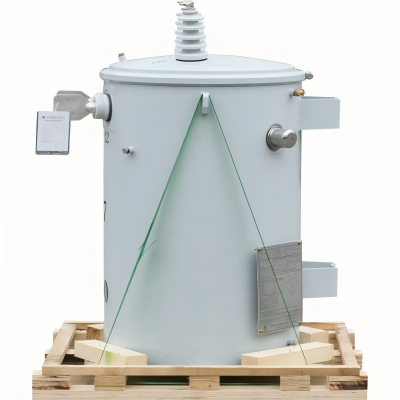
A pad-mounted transformer is commonly used for outdoor medium-voltage distribution where underground primary cables serve a building or campus. Its enclosed, tamper-resistant construction combines the transformer and accessible cable compartments in a ground-mounted package.
For data center campuses, pad-mounted units can support modular building blocks, phased expansion and distributed electrical rooms. The design may use radial or loop-feed arrangements depending on the utility system and continuity requirements. The final configuration must coordinate with the utility, medium-voltage switchgear, concrete pad, cable entrances and downstream 480 V equipment.
Key pad-mounted transformer questions
- What are the primary and secondary voltages and winding connections?
- What kVA rating is required for the present load and planned expansion?
- What impedance is needed for fault-current and protection coordination?
- Is radial feed or loop feed required?
- What insulating liquid, enclosure finish and environmental options apply?
- Which fuses, switches, arresters, gauges and monitoring accessories are required?
- What dimensional restrictions apply to the pad, cable opening and site clearances?
Where Dry-Type Transformers Fit
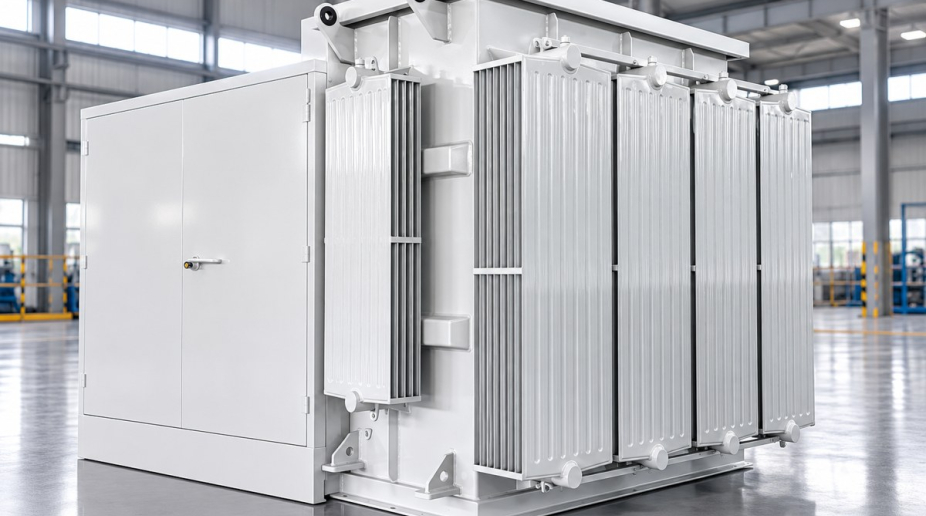
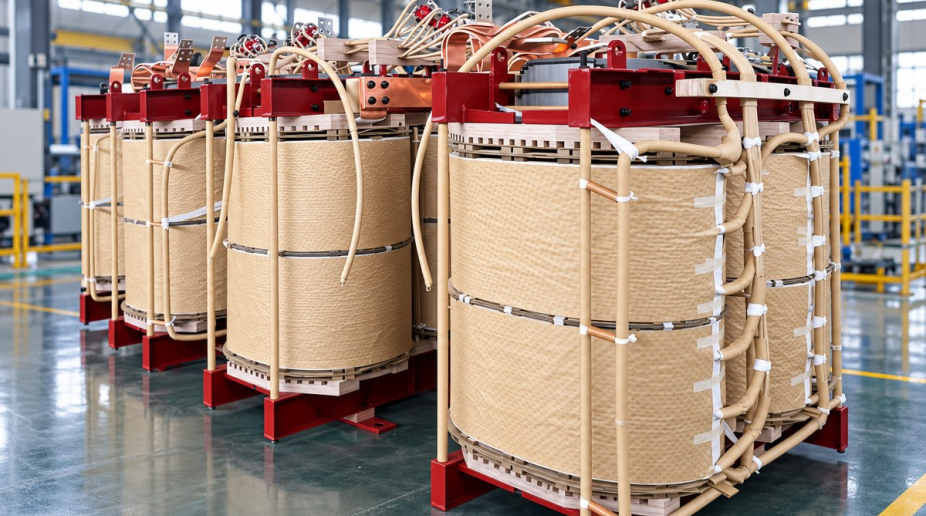
A dry-type transformer is often selected for indoor electrical rooms, data halls and other locations where liquid containment, fire considerations and proximity to loads influence equipment choice. VPI and cast-resin constructions serve different environmental and performance requirements, so the specification should identify the installation conditions rather than treating all dry-type transformers as interchangeable.
Dry-type equipment for data center applications should be coordinated with ventilation, ambient temperature, harmonic loading, enclosure requirements, sound limits and the upstream and downstream protective devices. Engineers should also confirm the required efficiency, insulation system, winding material, taps, temperature rise and test documentation.
Pad-Mounted or Dry-Type: It Is Usually a System Decision
Many data center projects use both types. Outdoor pad-mounted transformers may receive medium-voltage utility power and distribute it to buildings, while indoor dry-type transformers serve localized loads or specific voltage transformations. The most reliable approach is to evaluate the one-line diagram as a complete system.
The comparison should include location, fire and environmental constraints, maintenance access, loss evaluation, redundancy, replacement strategy and total installed cost. Selecting equipment independently can create avoidable conflicts in fault current, cable sizing, protection settings and physical interfaces.
Information to Provide Before Requesting a Quotation
A useful transformer inquiry should include the one-line diagram, load schedule, primary and secondary voltage, frequency, phase, winding connection, impedance target, winding material, installation environment, enclosure rating, cooling method, applicable standards, accessories, quantity, destination and required delivery date. Data center projects should also identify the redundancy concept and any staged-capacity plan.
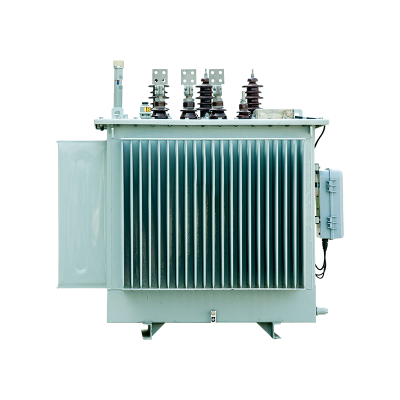
Qinghe Electric manufactures pad-mounted, oil-immersed, VPI dry-type and cast-resin transformers for international power-distribution projects. Our engineering team can review project specifications and coordinate transformer interfaces with medium- and low-voltage switchgear. Contact Qinghe Electric to discuss a data center transformer requirement.
Sources
U.S. Department of Energy, 2024 Report on U.S. Data Center Energy Use; U.S. Department of Energy Office of Electricity, Distribution Transformer Demand research.